Brain Fog After 60: Causes and How to Clear It
You walk into a room and forget why. A word sits on the tip of your tongue and refuses to come. Reading the same paragraph three times, you still cannot hold onto it. That cloudy, slow, "cotton wool" feeling has a name — brain fog — and after 60 it sends a lot of people into quiet worry that something is seriously wrong. Here is the reassuring part: brain fog is a symptom, not a diagnosis, and the things that cause it are usually common and fixable. This guide explains the eight most frequent causes of brain fog after 60, how to clear each one, and the clear signs that mean it is time to see a doctor.

Key Takeaways
- Brain fog is a symptom, not a disease — cloudy thinking, slow recall and trouble focusing that comes and goes.
- The most common drivers after 60 are poor sleep, dehydration, low B12, thyroid issues, stress and certain medications — most are reversible.
- Brain fog differs from dementia: fog fluctuates and has triggers, while dementia is progressive and steadily worsens.
- Fix the basics first; a brain-healthy diet and a daily cognitive support like Memopezil can support clarity once the underlying cause is handled.
What Brain Fog Actually Is
Brain fog is not a medical diagnosis — it is an everyday phrase for a cluster of symptoms: difficulty concentrating, slower thinking, forgetfulness, mental fatigue and a feeling that your mind is working through a haze. The OHSU Center for Women's Health makes an important point: there are many possible causes of brain fog, and most of them are far less frightening than Alzheimer's disease [4].
What unites these causes is that they interfere with the brain's energy, chemistry or circulation. When neurons do not get enough rest, water, fuel or the right hormones, thinking slows down. Identify which lever is out of balance, correct it, and the fog usually lifts. So let's go through the eight most common ones.
8 Common Causes of Brain Fog After 60
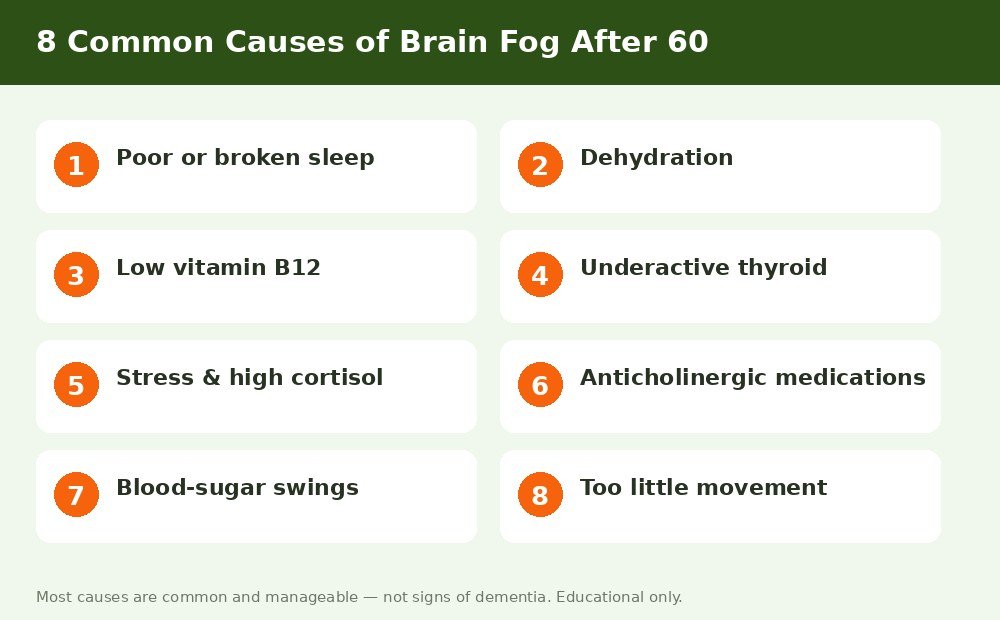
1. Poor or Broken Sleep
Sleep is when the brain clears metabolic waste and locks in memories. After 60, sleep tends to become lighter and more fragmented, and conditions like sleep apnea become more common. Even a few nights of poor sleep can leave you foggy, forgetful and unable to focus. Aim for a steady 7–8 hours, keep a consistent wake time, and ask your doctor about screening for a sleep disorder if you snore heavily or wake unrefreshed.
2. Dehydration
The brain is about three-quarters water, and the sense of thirst fades with age — a risky combination. Mild dehydration is one of the most overlooked causes of cloudy thinking and is also one of the easiest to fix. A meta-analysis found that even mild dehydration measurably impairs attention and short-term memory [3]. Sip water through the day rather than waiting until you feel thirsty.
3. Low Vitamin B12
Vitamin B12 is essential for healthy nerves and red blood cells, but the body absorbs less of it with age, and some common medications reduce it further. Low B12 is a classic, frequently missed cause of memory problems and brain fog in older adults. The good news: it shows up on a simple blood test and is straightforward to correct.
4. An Underactive Thyroid
The thyroid sets the body's metabolic pace, including the brain's. An underactive thyroid (hypothyroidism) becomes more common with age and frequently shows up first as sluggish thinking, fatigue and poor concentration. It is diagnosed with a blood test and treated effectively, so it is well worth ruling out.
5. Stress and High Cortisol
Chronic stress keeps the hormone cortisol elevated, which interferes with the brain's memory center and makes focus harder. Grief, caregiving, financial worry and big life transitions are common after 60 and all take a cognitive toll. Stress-lowering routines — daily walks, breathing exercises, time in nature, and protecting sleep — directly support clearer thinking.
6. Certain Medications
Many widely used medications can cloud thinking, especially those with anticholinergic effects — found in some sleep aids, allergy pills, bladder medications and antidepressants. Research has linked higher cumulative use of strong anticholinergics to greater cognitive risk in older adults [5]. Never stop a prescription on your own, but do bring a full list of everything you take — including over-the-counter products — to your doctor or pharmacist for a review.
7. Blood-Sugar Swings
The brain runs on a steady supply of glucose. Diets heavy in refined carbohydrates and sugar cause spikes and crashes that show up as afternoon fog and difficulty concentrating. Steadier energy comes from whole grains, beans, protein and healthy fats — the same foods that protect the brain long-term.
8. Too Little Movement
Physical activity drives oxygen-rich blood to the brain and supports the growth of new connections. A sedentary stretch leaves thinking sluggish, while regular movement is one of the most reliable ways to sharpen it. Even a brisk 30-minute walk most days makes a measurable difference to focus and mood.
When Brain Fog Is a Reason to See a Doctor
Most brain fog is harmless and reversible, but see a healthcare professional if cloudy thinking is getting steadily worse, interfering with daily tasks, or comes with warning signs such as getting lost in familiar places, trouble managing money or medications, sudden confusion, personality changes, or difficulty with language. These deserve prompt evaluation. Trust your instincts — if something feels different from your normal, it is always worth a conversation with your doctor.
How to Clear Brain Fog: A Practical Plan
Because brain fog usually has a fixable cause, a simple daily routine clears it for many people. Start with the fastest levers — water, sleep and movement — then build the longer-term habits that keep your mind sharp.

| Habit | Why It Helps | How Fast |
|---|---|---|
| Sleep 7–8 hrs, steady schedule | Clears waste, consolidates memory | Days |
| Hydrate through the day | Restores attention and recall | Hours–days |
| 30 min movement most days | Boosts brain blood flow | Days–weeks |
| MIND-diet foods | Antioxidants and steady glucose | Weeks–months |
| Medication review | Removes hidden fog-causing drugs | Varies |
| Stress & social routine | Lowers cortisol, stimulates the mind | Weeks |
Diet deserves special mention. The eating pattern most consistently tied to a sharper, clearer mind is the MIND diet — rich in leafy greens, berries, whole grains, nuts and fish — which has been linked in research to slower cognitive decline in older adults [2]. Our guide to the best brain foods for memory and focus breaks down exactly what to put on your plate.
Expert Insight: Treat the Cause, Not Just the Symptom
The single biggest mistake with brain fog is treating it as one vague problem. In practice it is usually one or two specific, correctable factors stacked on top of each other — a little dehydration plus a few bad nights of sleep, or a new medication plus skipped meals. Work through the causes one at a time, fix what you find, and the fog tends to clear on its own.
Where Cognitive Support Fits In
Once the basics are handled — sleep, water, a brain-healthy diet, a medication review and any deficiency corrected — some people add a daily cognitive support supplement to help with focus and mental clarity. This is support, not a shortcut, and it never replaces fixing an underlying cause.
Memopezil is formulated around this idea. It brings together seven well-studied botanical nootropics — including Bacopa Monnieri, Lion's Mane and standardized Ginkgo Biloba, alongside L-theanine for calm focus — to support memory, concentration and clarity in adults 60+. It is caffeine-free, so it will not add the jittery edge that can make fog feel worse. You can see the full formula on the ingredients page or read how it works on the how it works page.
Support Clearer, Sharper Thinking
Once you have handled sleep, hydration and diet, Memopezil adds seven science-backed, caffeine-free nootropics to support focus, memory and mental clarity — made for adults 60+.
ORDER MemoPezil NOWFrequently Asked Questions
Is brain fog after 60 a normal part of aging?
Some slowing of recall and processing speed is normal, but persistent brain fog is usually driven by specific, reversible factors such as poor sleep, dehydration, low B12, thyroid issues, stress or medications. Because the causes are so treatable, ongoing fog is worth investigating rather than accepting.
What is the difference between brain fog and dementia?
Brain fog fluctuates, comes and goes, and usually has a trigger like a bad night's sleep. Dementia involves a progressive, lasting decline that interferes with daily independence [4]. Most fog is not dementia, but steadily worsening memory problems should be evaluated.
How can I clear brain fog quickly?
Start with the fastest levers: drink water, sleep a full night, eat a balanced meal to steady blood sugar, and take a brisk walk. These can lift mild fog within a day or two. For lasting clarity, address the underlying cause.
Can vitamin deficiencies cause brain fog?
Yes. Low vitamin B12 is a common cause in older adults because absorption drops with age. Low vitamin D, iron and dehydration can also contribute. A simple blood test can identify deficiencies, which are usually easy to correct.
References and Sources:
- [1] WebMD. Reasons You May Have Brain Fog. webmd.com/brain.
- [2] Morris, M. C., et al. (2015). MIND diet slows cognitive decline with aging. Alzheimer's & Dementia, 11(9), 1015–1022. PMID: 26086182.
- [3] Wittbrodt, M. T., & Millard-Stafford, M. (2018). Dehydration Impairs Cognitive Performance: A Meta-analysis. Medicine & Science in Sports & Exercise, 50(11), 2360–2368. PMID: 29933347.
- [4] OHSU Center for Women's Health. Brain Fog vs. Dementia. ohsu.edu.
- [5] Gray, S. L., et al. (2015). Cumulative Use of Strong Anticholinergics and Incident Dementia: A Prospective Cohort Study. JAMA Internal Medicine, 175(3), 401–407. PMID: 25621434.