15 Best Brain Foods for Memory and Focus After 60
The foods on your plate reach your brain within hours, and over the years they shape how sharply you think. After 60, that connection becomes more important than ever — the brain works harder to stay supplied with oxygen, glucose and the building blocks of memory. The good news is that the best brain foods for memory and focus are ordinary, affordable and already sitting in the produce aisle. This guide walks through the 15 most research-backed brain foods, the specific nutrient in each one that does the work, and how to put them together into a plate that protects your mind for the long run.
Key Takeaways
- The strongest brain foods share three traits: omega-3 fats, antioxidant polyphenols and B vitamins that protect aging neurons.
- Leafy greens, berries and fatty fish have the deepest research — one study tied daily greens to a brain 11 years younger in function.
- Eating pattern beats any single "superfood." The MIND diet is the eating style most consistently linked to slower cognitive decline.
- Food first — but after 60, gaps are common, which is where a focused supplement like Memopezil can support a brain-healthy diet.
Why What You Eat Matters More for Your Brain After 60
Your brain is only about 2% of your body weight, yet it burns roughly 20% of your daily energy. Every thought and memory depends on a steady delivery of glucose, oxygen and raw materials carried in through tiny blood vessels. As we age, two things change: circulation to the brain becomes less efficient, and the brain accumulates more oxidative stress — the wear-and-tear damage caused by unstable molecules called free radicals.
This is exactly where food earns its keep. The nutrients in brain foods do three jobs at once: they supply omega-3 fats that keep neuron membranes flexible, they flood the brain with antioxidants that neutralize free radicals, and they deliver B vitamins that help control inflammation. Diets rich in these foods are linked in large studies to slower memory decline, while diets heavy in fried food, sugar and trans fats are tied to the opposite [1][3].
The 15 Best Brain Foods for Memory and Focus
Below are the foods with the most credible evidence behind them, starting with the heavy hitters. You do not need all 15 every day — aim to rotate several through your week.
1. Fatty Fish (Salmon, Sardines, Mackerel)
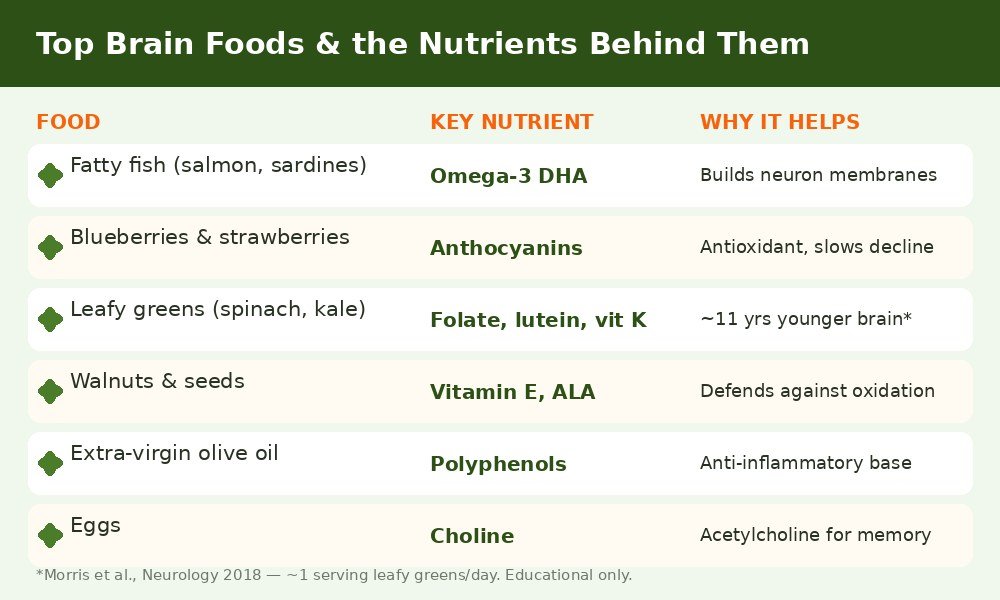
Fatty fish is the closest thing to a brain "building material." It is rich in omega-3 DHA, the fat that makes up a large share of the brain's structure and keeps neuron membranes fluid enough to fire properly. Harvard Health notes that omega-3s have been linked to lower blood levels of beta-amyloid, the protein that clumps in Alzheimer's brains. Aim for two servings a week of lower-mercury options like salmon, sardines, cod or pollock.
2. Blueberries
Blueberries owe their deep color to anthocyanins, flavonoid antioxidants that cross into the brain and concentrate in the memory hub. In a Harvard analysis of more than 16,000 older women, those eating two or more servings of berries a week delayed memory decline by up to 2.5 years [2].
3. Strawberries
Strawberries were the other berry singled out in that same Nurses' Health Study data for slowing cognitive decline [2]. They add vitamin C and a different mix of flavonoids, which is why variety in your berry bowl matters more than picking just one.
4. Leafy Greens (Spinach, Kale, Collards)
If one food group deserves a daily spot, it is dark leafy greens. They are loaded with folate, lutein, vitamin K and beta-carotene. In the Rush Memory and Aging Project, adults eating about one serving of greens a day declined as slowly as people 11 years younger [4]. That is one of the most striking single-food findings in the literature.
5. Walnuts
Among nuts, walnuts get a special mention because they are high in alpha-linolenic acid (a plant omega-3) plus vitamin E and polyphenols. A small daily handful is linked to lower oxidative stress and inflammation, both of which wear on the brain over time.
6. Extra-Virgin Olive Oil
Olive oil is the anchor fat of the Mediterranean and MIND diets. Extra-virgin olive oil keeps the highest level of polyphenols and anti-inflammatory compounds, which is why nutritionists recommend it as your main cooking and dressing oil in place of butter or margarine.
7. Eggs
Eggs are one of the best dietary sources of choline, the raw material your body uses to make acetylcholine — a neurotransmitter central to memory and learning. They also supply B12 and lutein, making them a quiet but valuable brain food.
Those seven do the heavy lifting. The next eight round out a brain-healthy plate and bring antioxidants, healthy fats and steady energy that supports focus throughout the day.
| Brain Food | Key Brain Nutrient | What It Supports |
|---|---|---|
| 8. Broccoli | Vitamin K, sulforaphane | Antioxidant defense and healthy brain tissue |
| 9. Pumpkin seeds | Magnesium, zinc, iron | Nerve signaling and learning |
| 10. Dark chocolate (70%+) | Cocoa flavanols | Blood flow, alertness and mood |
| 11. Turmeric | Curcumin | Anti-inflammatory and antioxidant action |
| 12. Green tea | L-theanine + polyphenols | Calm, steady focus without jitters |
| 13. Oranges & citrus | Vitamin C, flavanones | Antioxidant protection of neurons |
| 14. Avocado | Monounsaturated fat, folate | Healthy blood flow to the brain |
| 15. Beans & whole grains | Fiber, B vitamins, slow glucose | Steady energy and concentration |
Notice the pattern. The brain rewards color, fiber and healthy fat, and punishes refined carbs and fried food. A plate that is half vegetables, with a palm of fish or beans, a drizzle of olive oil and a handful of berries, hits most of these targets at once.
Expert Insight: Whole Foods Beat Single Nutrients
Researchers keep finding that food beats isolated nutrients for brain health. A blueberry delivers anthocyanins alongside fiber, vitamin C and dozens of other compounds that seem to work together. That synergy is hard to bottle, which is the strongest argument for filling your plate before reaching for any pill. The smartest strategy is food first, supplement second — never the reverse.
The MIND Diet: A Pattern, Not a Single Superfood
The single most useful idea in brain nutrition is that pattern matters more than any one food. The MIND diet — a hybrid of the Mediterranean and DASH diets, designed specifically for the brain — captures this perfectly. It asks you to emphasize 10 brain-healthy food groups and limit 5 less helpful ones.
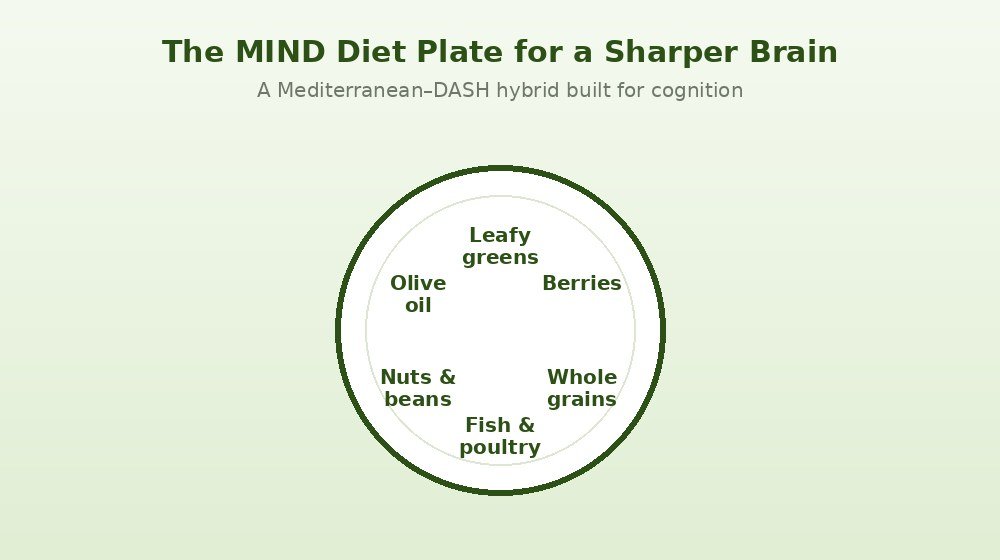
In a study of older adults, those who followed the MIND diet most closely had a markedly lower rate of Alzheimer's disease, and even moderate adherence appeared protective [1]. A companion study found that high adherence was linked to a slower rate of cognitive decline equivalent to being about 7.5 years younger [5]. The 10 foods to favor are leafy greens, other vegetables, berries, nuts, whole grains, fish, poultry, beans, olive oil and (modestly) wine. The 5 to limit are red meat, butter and margarine, cheese, pastries and sweets, and fried or fast food.
Can Food Alone Protect Your Memory After 60?
Here is the honest answer many "superfood" articles skip. Diet is powerful, but it is one lever among several. The same research groups that praise brain foods are clear that sleep, regular exercise, mental stimulation, social connection and controlling blood pressure all pull in the same direction. Food is the foundation, not the whole house.
There is also a practical problem after 60. Appetite often shrinks, the senses of taste and smell fade, chewing can get harder, and many people simply eat a narrower range of foods than they did at 40. Absorption of key nutrients like B12 also drops with age. All of this means that even a person who "eats pretty well" can fall short on the exact compounds the aging brain needs most.
Where a Cognitive Supplement Fits In
This is the realistic role of a brain supplement: not to replace good food, but to deliver concentrated, well-studied compounds that are genuinely hard to eat enough of. Some of the most-researched cognitive ingredients barely appear in a normal diet at all. You will not get a meaningful dose of Bacopa Monnieri, Lion's Mane mushroom or standardized Ginkgo Biloba from groceries.
That is the gap Memopezil is built to fill. Its formula combines seven botanical nootropics — including the three above plus phosphatidylserine, L-theanine and Rhodiola — at doses informed by clinical research, so they sit alongside your brain-healthy plate rather than competing with it. You can see the full breakdown on the ingredients page or read how the formula works on the how it works page. For a wider view of options, our guide to the best brain supplements for seniors compares the leading choices.
Eat Well — and Fill the Gaps
A brain-healthy plate is the foundation. Memopezil adds the concentrated, science-backed nootropics that are nearly impossible to get from food alone — formulated for memory, focus and mental clarity in adults 60+.
ORDER MemoPezil NOWFrequently Asked Questions
What is the single best food for the brain after 60?
No single food is a magic bullet, but leafy greens have some of the strongest evidence. In the Rush Memory and Aging Project, daily greens were tied to cognitive function equivalent to being 11 years younger [4]. Fatty fish and berries are close behind. The bigger win comes from eating several brain foods together as a pattern.
Which foods are bad for memory and should be limited?
Diets high in artificial trans fats, fried and ultra-processed foods, added sugar and excess red meat are repeatedly linked to faster cognitive decline. The MIND diet asks you to keep butter, cheese, sweets, fried food and red meat occasional rather than daily.
How long does it take for brain foods to improve memory?
Brain foods work slowly and cumulatively, not overnight. The studies showing benefits followed people for years. The sooner and more consistently you eat this way, the more protection it appears to offer.
Can food alone prevent memory loss?
Food is foundational but works best alongside sleep, exercise, mental stimulation and managing conditions like high blood pressure. After 60, appetite and nutrient absorption often drop, so a daily supplement such as Memopezil can help fill the gaps a narrower diet leaves behind.
References and Sources:
- [1] Morris, M. C., et al. (2015). MIND diet associated with reduced incidence of Alzheimer's disease. Alzheimer's & Dementia, 11(9), 1007–1014. PMID: 25681666.
- [2] Devore, E. E., Kang, J. H., Breteler, M. M., & Grodstein, F. (2012). Dietary intakes of berries and flavonoids in relation to cognitive decline. Annals of Neurology, 72(1), 135–143. PMID: 22535616.
- [3] Cleveland Clinic. The Best Brain Foods for Better Memory and Function. health.clevelandclinic.org/brain-foods.
- [4] Morris, M. C., et al. (2018). Nutrients and bioactives in green leafy vegetables and cognitive decline: Prospective study. Neurology, 90(3), e214–e222. PMID: 29263222.
- [5] Morris, M. C., et al. (2015). MIND diet slows cognitive decline with aging. Alzheimer's & Dementia, 11(9), 1015–1022. PMID: 26086182.
- [6] Harvard Health Publishing. Foods linked to better brainpower. health.harvard.edu.